Your menu isn't used the same way by everyone
Most restaurant owners believe that a menu is static. Every guest sees the same dishes in the same order, so naturally everyone follows a similar path.
But digital menu analytics reveal something completely different.
Guests from different countries browse in remarkably different ways.
Some immediately search for traditional dishes.
Others head straight to burgers or pasta because they want something familiar.
Some spend thirty seconds making a decision.
Others explore for several minutes before placing an order.
These aren't random behaviors. They follow clear patterns. And once you understand those patterns, you can improve both the guest experience and your revenue.
What locals usually do
Local guests often arrive with a plan. They already know your restaurant. They've heard about certain dishes. They understand local ingredients.
Because of that, locals usually:
Go directly to a specific category.
Spend less time reading descriptions.
Ignore ingredients they already recognize.
Skip photos more often.
Make faster decisions.
For them, the menu serves as confirmation rather than discovery.
How international guests browse differently
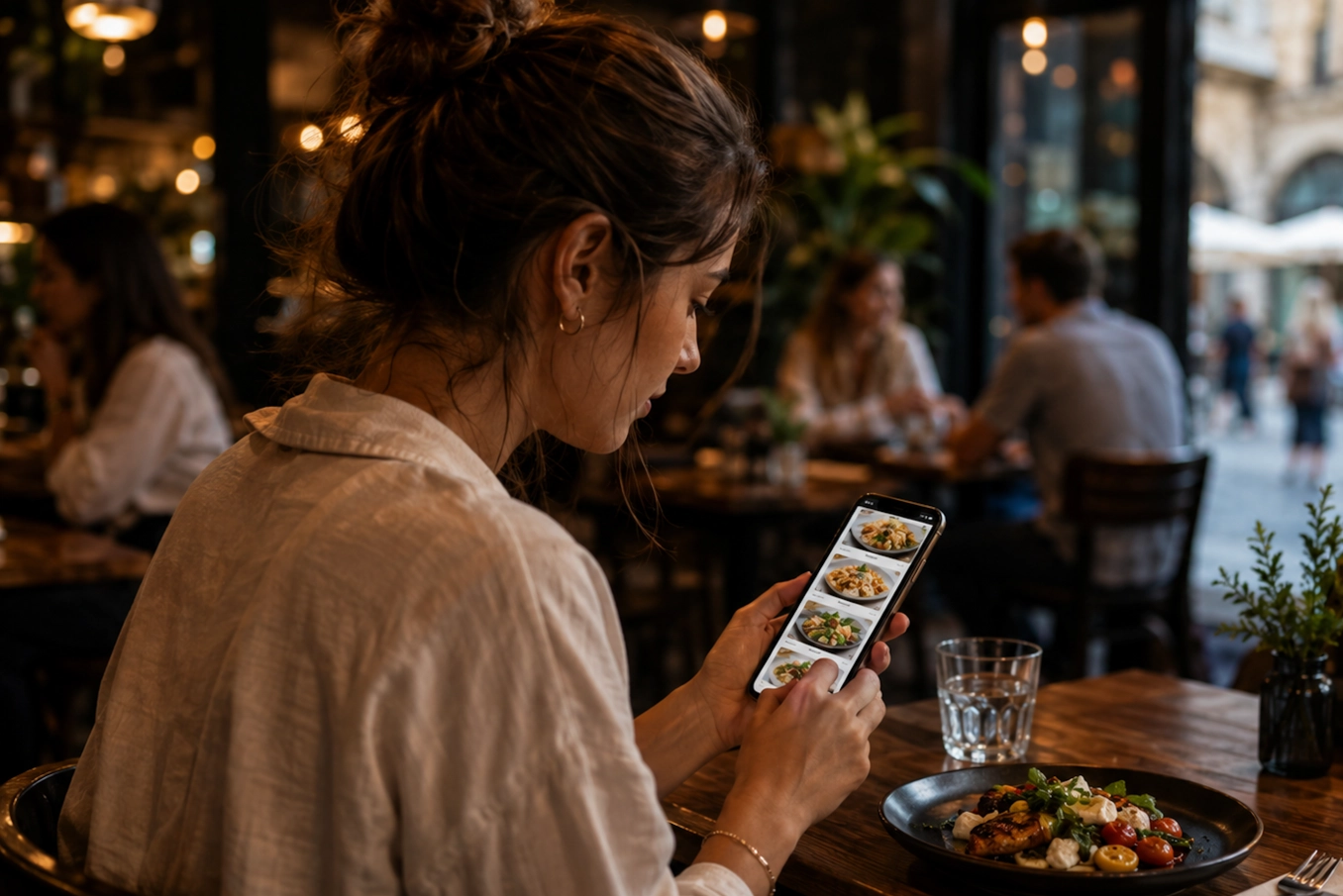
International visitors behave very differently. For them, your menu is part of the travel experience. They aren't simply choosing lunch. They're exploring local cuisine.
Menu analytics often show that tourists:
Open significantly more dishes before ordering.
Spend much longer reading descriptions.
View almost every photo.
Frequently check drinks before food.
Compare similar dishes before deciding.
Return to previous categories multiple times.
Their decision process is more careful because every dish is unfamiliar.
Without enough information, uncertainty usually wins.
Photos become much more important
One of the biggest differences appears in photo engagement.
A local may order grilled trout simply because they already know how it tastes.
A tourist doesn't.
Without a photo, that dish remains an abstract name.
With a professional image, it suddenly becomes something they can imagine enjoying.
This is why restaurants often notice that visually attractive dishes receive far more attention from international visitors than from locals.
For tourists, photos reduce uncertainty.
And reduced uncertainty leads to more orders.
Descriptions suddenly matter
Many restaurant owners underestimate descriptions. Locals rarely read them. Tourists often do.
Imagine seeing this menu item:
Grandma's Special
Sounds nice.
But what is it?
Now compare it with:
Slow-cooked beef with creamy mashed potatoes, roasted vegetables, and homemade mushroom sauce.
One creates curiosity. The other answers questions.
Good descriptions don't just sell food.
They build confidence.
Local specialties need context
Restaurants often assume everyone knows their signature dishes. International guests don't.
Instead of listing:
Zeama
Explain it.
Traditional Moldovan chicken soup with homemade noodles, fresh herbs, and vegetables.
Instead of:
Placinte
Describe them.
Freshly baked pastries filled with cheese, potatoes, cabbage, or cherries.
A few extra words remove hesitation.
Guests don't want to order something they don't understand.
Drinks reveal another interesting pattern
Many tourists browse beverages before food. Why?
Because drinks are familiar. Wine. Beer. Cocktails. Coffee.
These categories help visitors understand pricing and the overall style of the restaurant.
Digital menu analytics often reveal that international guests spend surprisingly long periods exploring local wines or signature cocktails before even opening the food menu.
That creates opportunities for restaurants to introduce local specialties in a comfortable way.
Language isn't the whole solution
Many restaurants proudly offer menus in multiple languages.
That's important.
But translation alone doesn't solve everything.
Even a perfectly translated menu can still confuse guests if it lacks:
Clear photos.
Ingredient explanations.
Portion descriptions.
Spice indicators.
Allergens.
Preparation style.
Guests don't just need words. They need context.
The data most restaurants never see
With a printed menu, none of this is visible.
You never know:
Which dishes international guests open first.
Which photos attract attention.
Which categories they skip.
Where they stop browsing.
Which descriptions they actually read.
Every decision happens silently.
And when guests leave, that information disappears forever.
How Oto helps restaurants understand guest behavior
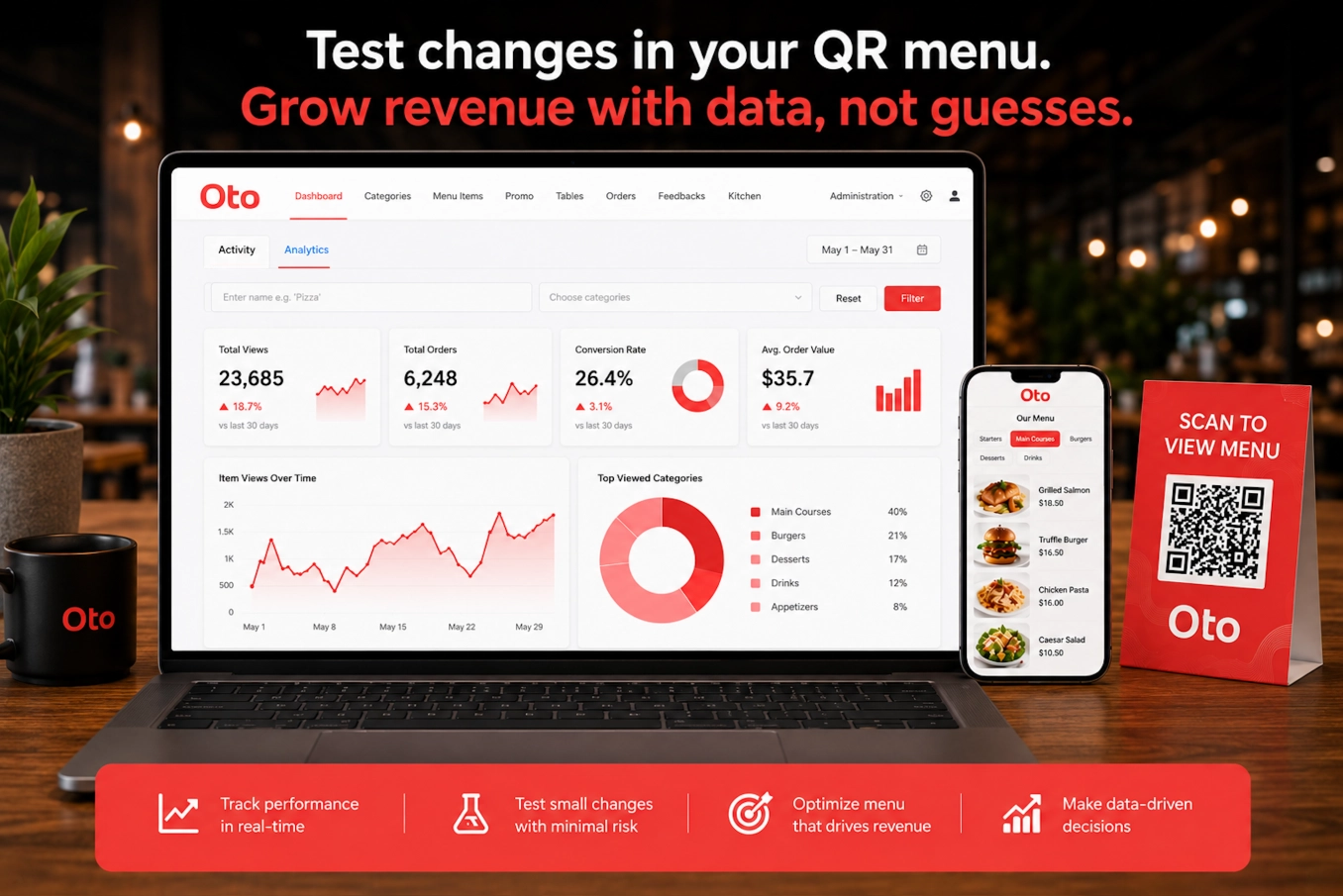
Oto transforms a digital menu into a source of behavioral insights.
Instead of guessing what visitors want, restaurants can understand how different guests actually interact with the menu.
With Oto, restaurants can:
See which dishes attract the most attention.
Compare browsing behavior across languages.
Discover which menu items international guests explore the longest.
Identify dishes that receive many views but few orders.
Improve descriptions that fail to convert interest into sales.
Test better photos and monitor their impact.
The result is a menu that continuously improves instead of remaining static.
Over time, restaurants stop making decisions based on assumptions and start optimizing based on real guest behavior.
Small improvements create better guest experiences
You don't need to redesign your entire menu overnight. Often, the biggest improvements come from small adjustments.
Adding photos to your most unique dishes. Expanding descriptions for local specialties. Moving popular tourist favorites higher in the menu. Highlighting signature drinks. Improving translations.
Each change removes a little uncertainty.
And every time uncertainty decreases, confidence grows.
Confident guests explore more, order more, and leave happier.
Your international guests are already telling you what they want
The fascinating part is that international visitors constantly leave clues.
Every tap. Every scroll. Every opened dish. Every abandoned category.
Traditional menus hide those signals.
Digital menu analytics reveal them.
The restaurants that understand these patterns create menus that feel intuitive for every guest, whether they're a regular customer or someone visiting the city for the very first time.
Try Oto
Your menu is more than a list of dishes. It's the first conversation your restaurant has with every guest.
With Oto, you can offer a beautiful digital menu, support multiple languages, provide rich descriptions and photos, and most importantly, understand how different guests interact with your menu.
Stop guessing what your international visitors want. Start making decisions based on real behavior.
Try Oto today: https://otoqr.app/en/register
FAQ
Do international guests really browse menus differently than locals?
Yes. Digital menu analytics consistently show that international guests spend more time exploring, open more dishes, rely more heavily on photos, and read descriptions more carefully before making a decision.
Why are photos more important for tourists?
Photos reduce uncertainty. When guests are unfamiliar with local cuisine, seeing a professional image helps them understand what they're ordering and increases confidence.
Is translating my menu enough?
Translation is only the first step. Guests also benefit from ingredient descriptions, allergen information, portion details, spice indicators, and high-quality photos.
Can digital menu analytics distinguish between different languages?
Yes. Platforms like Oto can show how guests interact with different language versions of your menu, helping restaurants understand browsing behavior across audiences.
How can restaurants use this data?
Restaurants can optimize menu layouts, improve descriptions, add photos where needed, promote dishes that appeal to tourists, and continuously refine the guest experience based on actual behavior instead of assumptions.
Can understanding guest behavior increase restaurant revenue?
Absolutely. When guests find dishes more easily, feel more confident in their choices, and discover high-margin items through better menu design, restaurants often see improvements in both average order value and guest satisfaction.