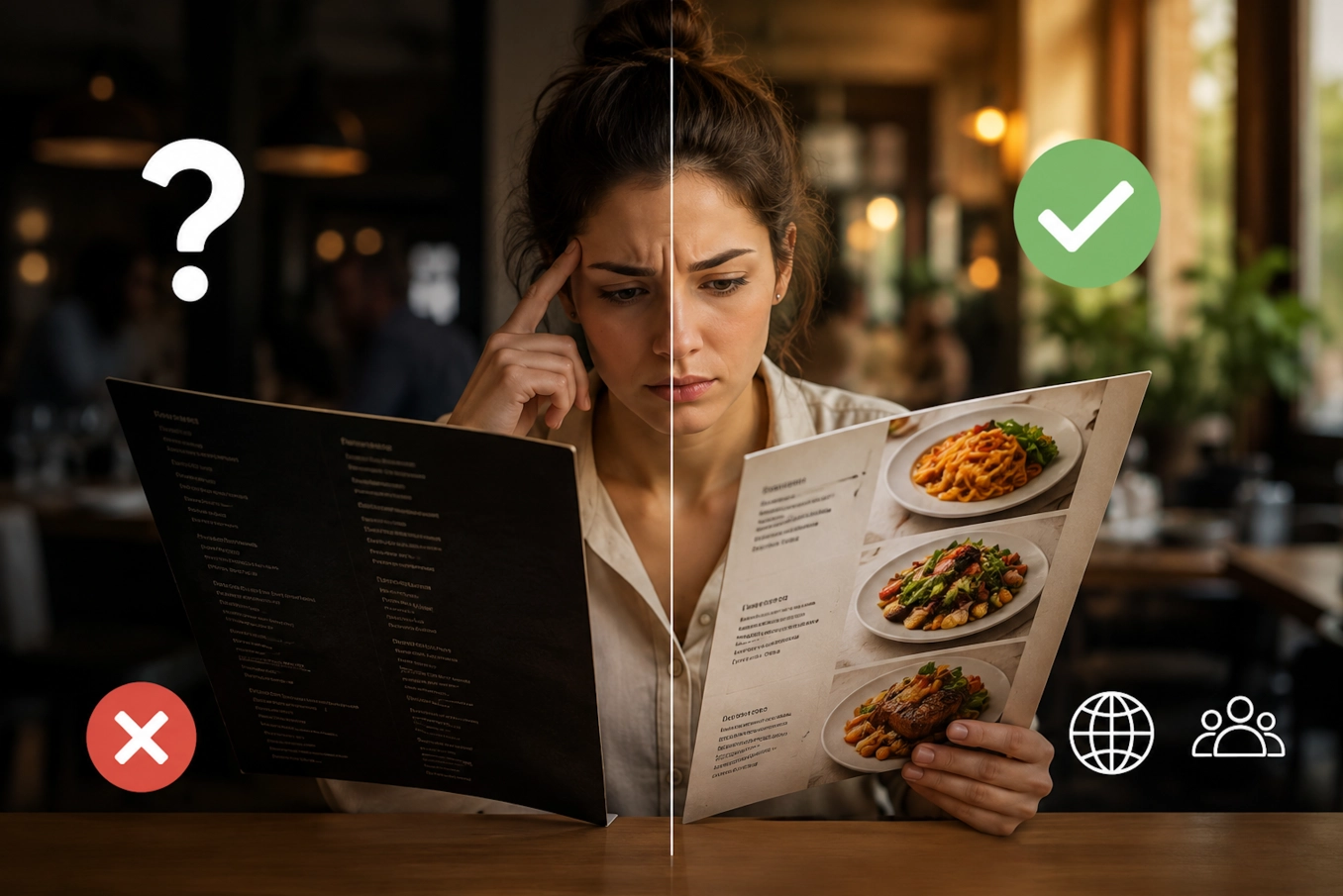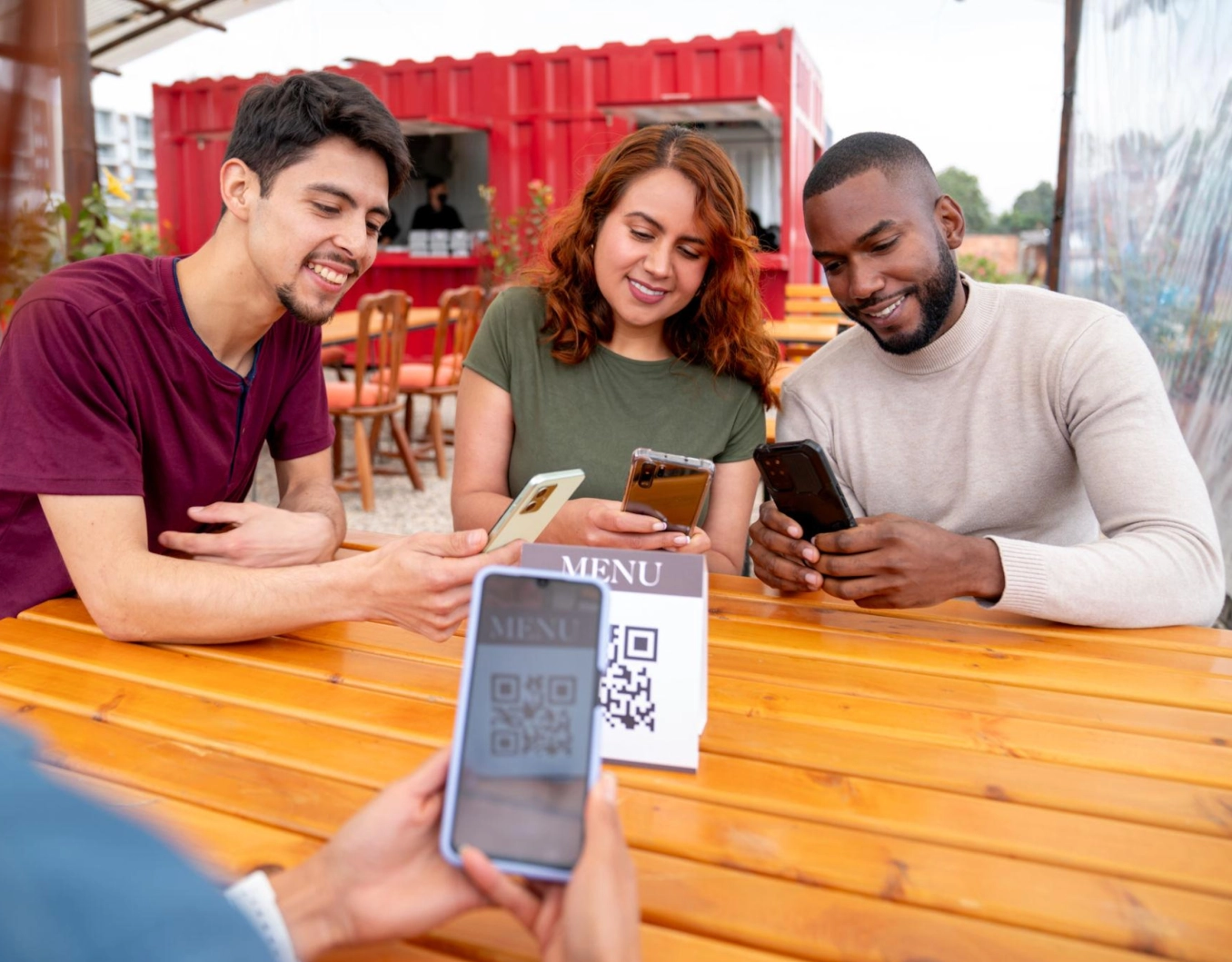
The old menu wasn’t broken. It was invisible.
Most restaurant owners don’t think of their menu as technology. It’s a document. A list.
Something guests use for a few minutes. But that assumption hides an important reality. The menu quietly influences almost every decision guests make.
What they notice.
What they ignore.
How confident they feel.
Whether they order dessert.
Whether they ask questions.
Whether they return.
Paper menus were designed for a different era. They work. But they have limits.
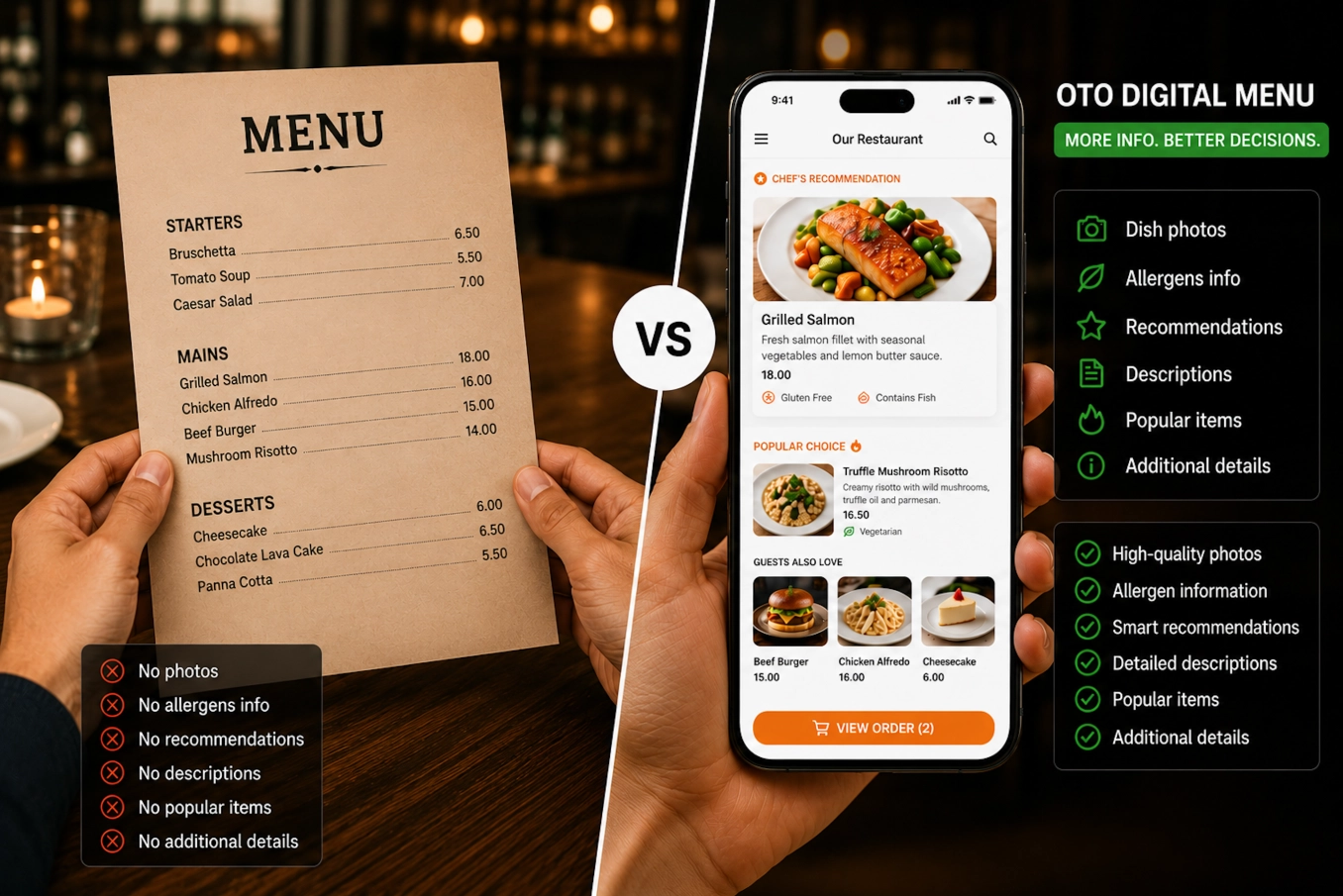
A printed menu cannot easily show:
Multiple dish photos
Allergen information
Seasonal recommendations
Upsell suggestions
Dynamic bestsellers
Personalized experiences
Instant updates
So guests naturally reduce complexity. They scan. They pick familiar dishes. They avoid uncertainty.
And restaurants unknowingly leave opportunities on the table.
What changed when guests switched to digital?
What surprised us wasn’t that guests liked using their phones.
It was what happened next.
Guests explored more
Paper menus encourage linear reading. Open. Scan. Decide.
Digital menus encourage exploration.
Tap.
Scroll.
Open categories.
Return.
Compare.
This small behavioral shift matters. When guests see more dishes, they create more chances to find something exciting. And discovery increases conversion.
Guests spent more time with the menu
Longer browsing sounds dangerous. Restaurants want quick service. But there’s a difference between waiting and engaging. Waiting feels frustrating. Exploring feels enjoyable.
Guests using Oto stayed engaged because the experience felt richer. Photos reduced uncertainty. Descriptions added context. Recommendations helped narrow choices.
The menu became less transactional and more experiential.
Guests discovered dishes they normally ignore
Think about a restaurant’s hidden stars.
Seasonal specials.
High-margin dishes.
Unique chef creations.
Those dishes often disappear inside printed menus. But photos and recommendations bring attention back.
Imagine a guest opening the burger category and suddenly seeing:
Guests also love → Truffle fries
Or:
Perfect with → House lemonade
That tiny moment changes the basket.
Guests asked fewer repetitive questions
Restaurant teams know the routine.
“Is this spicy?” “Does it contain nuts?”
“What’s inside?”
“Which one do you recommend?”
Questions are normal. But many happen because information is missing. When guests already see ingredients, allergens, visuals, and descriptions, decisions become easier.
Staff spend less time repeating and more time creating memorable service.
The psychology behind it: people don’t order food. They reduce uncertainty.
This may be the most important insight.
Guests rarely choose the objectively best dish. They choose the safest decision.Paper menus increase uncertainty.
Digital menus reduce it.
Photos answer: “Will I like it?”
Descriptions answer: “What should I expect?”
Allergens answer: “Is this safe for me?”
Recommendations answer: “What do others choose?”
Every layer of information lowers hesitation. And lower hesitation often increases ordering confidence.
Why this matters for restaurant revenue
Restaurants often calculate QR menu ROI incorrectly. They compare:
Printing cost vs subscription cost.
But the bigger comparison is:
Passive menu vs active sales tool.
If more guests:
discover dishes,
order add-ons,
feel confident,
require less staff intervention,
then the menu becomes part of growth.
Not administration. The restaurants that win over the next few years won’t necessarily have better food. They’ll make decisions easier.
The Oto approach: turning menus into experiences
At Oto, we never wanted to replace paper just for the sake of digitalisation. The goal was different. Create a menu that helps guests decide.
That means giving restaurants tools like:
Beautiful dish visuals
Allergen visibility
Smart recommendations
Dynamic menu updates
Multilingual experiences
Contactless ordering
Restaurant analytics
Digital guest experience features
Because once guests interact with menus differently… restaurants start performing differently.
And unlike paper menus, digital menus keep learning.
Try Oto
Your guests already make decisions before speaking to staff. The question is: Are those decisions happening with enough information?
See how Oto transforms a static menu into an interactive experience that helps guests discover more and restaurants sell smarter.
FAQ
Do guests still prefer paper menus?
Some do. And that’s completely fine. Many restaurants successfully offer both options.
Does a QR menu slow down ordering?
Not necessarily. Guests often spend more time exploring but less time asking questions and hesitating.
Are photos really that important?
Yes. Photos reduce uncertainty and help guests imagine the final experience before ordering.
Can QR menus increase average order value?
They can encourage discovery, recommendations, and add-ons that guests may overlook in printed formats.
Should restaurants remove paper menus completely?
Not always. Hybrid models often work extremely well because they let guests choose.