Most QR Menus Are Still Just Digital Paper
This is the uncomfortable truth.
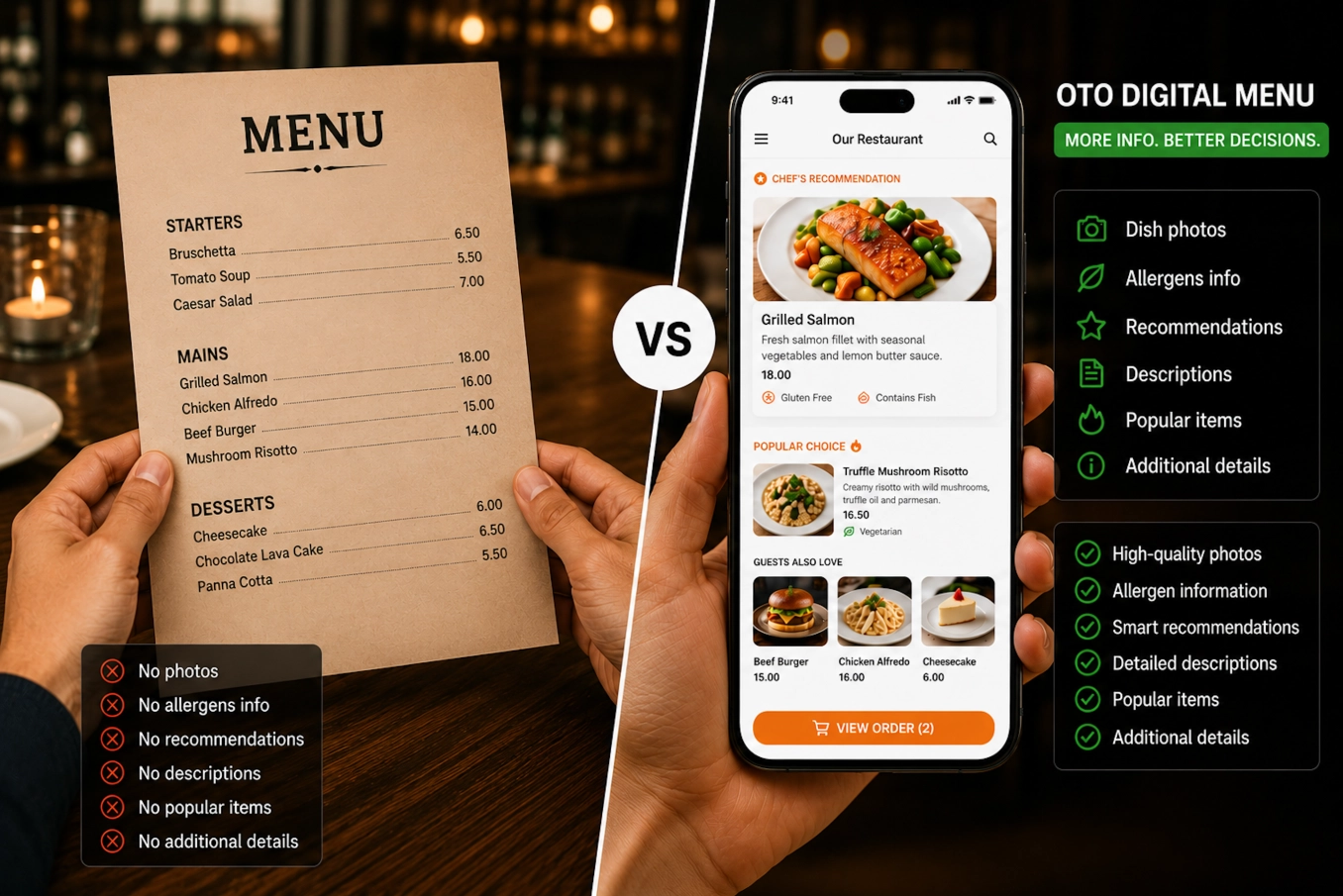
A huge number of restaurants invested in QR menus during and after the pandemic, but many of those systems never evolved. They simply replaced printed menus with PDFs or static digital lists.
The result?
Restaurants can now say they have a “digital menu,” but they still make decisions blindly.
Imagine having a website without analytics.
No idea where visitors click.
No idea what they search for.
No idea what they almost bought.
Sounds absurd, right?
Yet this is exactly how many restaurants operate today.
A modern QR menu should not only display dishes. It should help restaurants understand customer behavior in real time.
Because guests are constantly sending signals.
The question is whether your system captures them.
Your Guests Reveal More Than You Think
Every interaction inside a digital menu tells a story.
For example:
Which categories guests open first
Which dishes get the most views
Which items are ignored completely
How long guests stay on specific dishes
Which photos increase attention
Where guests stop scrolling
Which dishes are viewed often but rarely ordered
What guests check before ordering drinks or desserts
This information is gold for restaurants.
Because sometimes the problem is not the dish itself.
It’s the presentation.
A steak may not sell because:
the photo looks weak
the description feels generic
the price creates hesitation
the item is placed too low in the menu
the guest never even reaches it
Without behavioral data, restaurants guess.
With behavioral data, restaurants optimize.
The Biggest Blind Spot: “Viewed But Not Ordered”
This is one of the most important metrics most QR menus completely ignore.
Imagine this scenario.
Your pasta dish gets opened 300 times this week.
But only 18 guests order it.
That immediately tells you something is wrong.
Now compare that to another dish:
viewed 120 times
ordered 60 times
The second dish clearly converts better.
This changes the conversation completely.
Instead of asking:
“Which dishes sell most?”
You start asking:
“Which dishes convince people to order?”
That’s a much smarter question.
Because high-performing restaurants don’t just focus on popularity. They focus on conversion.
Guests Don’t Read Menus the Way You Think
Most owners imagine guests carefully reading the entire menu from top to bottom.
They don’t.
Digital behavior is much more chaotic.
Guests scroll fast.
They jump between categories.
They compare visually.
They stop when something catches attention.
Sometimes a single strong image increases orders dramatically.
Sometimes removing clutter improves sales more than adding new dishes.
Sometimes guests never reach your most profitable items because they’re buried too deep inside the menu.
This is exactly why behavioral analytics matter.
A QR menu should help you answer questions like:
Which sections lose attention?
Which dishes create curiosity?
Where do guests hesitate?
Which categories create the fastest decisions?
Without this data, menu optimization becomes guesswork.
Why This Matters More Than Ever
Restaurants today operate under pressure from every direction:
rising ingredient costs
staff shortages
increasing competition
higher customer expectations
Margins are tight.
Which means small improvements matter.
Even a tiny increase in:
dessert sales
drink upselling
premium dish visibility
average order value
can significantly impact monthly revenue.
The problem is that many restaurants try to solve these challenges using intuition alone.
But guest behavior leaves patterns.
And patterns create opportunities.
The Future of QR Menus Is Behavioral Intelligence
This is where digital menus are heading next.
Not just:
“Here’s the menu.”
But:
“Here’s how your guests think.”
The next generation of restaurant technology will help owners understand:
what attracts attention
what creates hesitation
what increases confidence
what drives impulse decisions
what encourages upselling
And honestly, this makes perfect sense.
E-commerce companies have been doing this for years.
Netflix studies viewing behavior.
Amazon studies clicks and conversions.
Food delivery apps constantly optimize user behavior.
Restaurants are only beginning to enter this phase.
How Oto Approaches This Differently
At Oto, we believe a QR menu should be more than a digital replacement for paper.
It should become a decision intelligence tool for restaurants.
That’s why Oto focuses not only on the digital guest experience, but also on helping restaurants understand customer behavior inside the menu itself.
Because the real value is not just showing dishes.
The real value is understanding:
what guests pay attention to
what they skip
what influences decisions
what increases spending
what creates loyalty
Imagine knowing:
which photos generate the highest engagement
which dishes guests constantly open but rarely order
which categories perform best at lunch versus dinner
where guests stop interacting with the menu
That changes how restaurants make decisions.
And over time, these small insights can lead to:
higher average bills
better menu structure
stronger upselling
smarter promotions
improved guest satisfaction
Your Menu Is Already Collecting Data
Most restaurants simply aren’t using it yet.
That’s the opportunity.
Because every scan, scroll, click, and pause inside a QR menu reflects customer intent.
And the restaurants that learn to understand this behavior first will have a major advantage over competitors still relying only on instinct.
The shift is already happening.
Oto QR menu is evolving from a static tool into a smart system that helps restaurants:
sell more
optimize faster
personalize experiences
reduce decision friction
improve loyalty
The restaurants that recognize this early will be the ones leading the next phase of hospitality.
Try Oto
If you want your QR menu to become more than just a digital list of dishes, Oto can help.
Create a smarter digital guest experience, improve upselling opportunities, and start understanding how your customers actually interact with your menu.
FAQ
What data can a QR menu collect?
A modern QR menu can track behavioral insights such as menu views, category popularity, dish engagement, scrolling behavior, and interaction patterns. Advanced systems can also help identify which dishes attract attention but fail to convert into orders.
Why is behavioral data important for restaurants?
Behavioral data helps restaurants understand how guests make decisions. This allows owners to optimize menu structure, improve dish presentation, increase upselling, and improve the overall guest experience.
Can a QR menu increase restaurant sales?
Yes. A well-optimized digital menu can increase average bills through better dish placement, stronger visuals, smarter upselling, and reduced decision friction.
What is the difference between a PDF menu and a smart QR menu?
A PDF menu is static and informational. A smart QR menu acts as a restaurant automation and analytics tool that helps owners understand customer behavior and optimize sales performance.
How does Oto help restaurants?
Oto helps restaurants create multilingual digital menus, improve the guest experience, support contactless ordering, and gain behavioral insights that can improve sales and customer loyalty.