The legal baseline (EU): what you can’t ignore
Everything starts from Regulation (EU) No 1169/2011.
This regulation doesn’t care how beautiful your menu is.
It cares whether the customer is properly informed and not misled.
Mandatory checklist (restaurants)
This is the part that protects you from fines and unnecessary stress:
Allergen information (non-negotiable)
You must clearly indicate the presence of the 14 major allergens.
No guessing. No “ask the waiter and hope they know.”
No misleading descriptions
If it says “fresh”, it must be fresh.
If it says “homemade”, it must actually be homemade.
Access to ingredient information
You don’t have to print everything in the menu, but you must be able to provide it immediately if asked.
Clear dish naming
No creative storytelling that hides reality.
Customers should understand what they are ordering.
Language clarity
Information must be understandable.
If you provide multiple languages, they must match.
What happens if you ignore this
Most restaurants don’t get fined immediately.
But when it happens, it’s never a small inconvenience.
Typical consequences:
fines (often €250 – €750+, depending on severity and country)
mandatory corrections and reprints
possible temporary suspension in serious cases
But honestly, the fine is not the biggest problem.
The invisible losses
a guest with allergies loses trust instantly
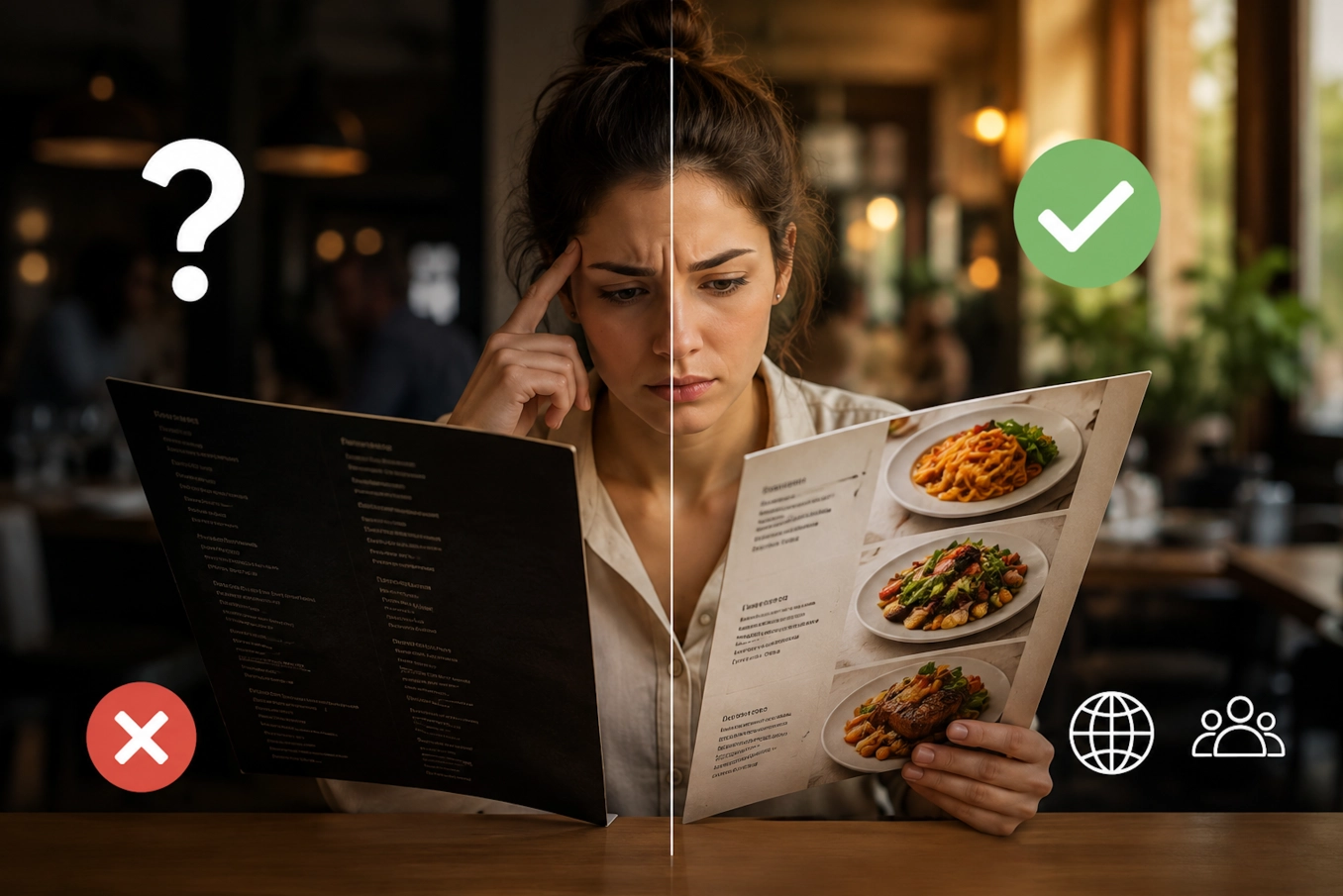
tourists feel confused and order less
unclear menus reduce average order value
negative reviews hurt more than any inspection
You don’t always see it in numbers.
But it’s quietly draining your revenue.
The hidden demand: people who actually look for numbers
There’s a growing group of customers who don’t just browse menus.
They scan for data.
Not because they’re obsessed, but because they care:
people tracking calories
gym-goers and fitness-focused diners
customers on specific diets
guests with health goals
For them, this is not “extra information”.
It’s the moment they decide what to order.
If your menu doesn’t show it:
they hesitate
they play safe and order less
or they don’t come back
If your menu does show it:
trust increases immediately
decisions become faster
and they often spend more
Important nuance: law vs reality
Nutritional values are not mandatory for restaurants under EU law.
But here’s what matters:
They’ve become a competitive advantage.
Not for everyone.
But for the customers who care, it makes all the difference.
The sales checklist: what actually drives revenue
This is where most menus fail. Not legally, but commercially.
Descriptions that sell
Not just ingredients.
Make people imagine the taste before they order.
Photos that guide decisions
People don’t read menus. They scan and decide quickly.
Smart structure
Your best dishes should stand out, not hide.
Multi-language support
If tourists don’t understand, they don’t order confidently.
Clear portions and details
“400g” builds more trust than “large portion”.
Optional nutritional data (used strategically)
Not mandatory, but powerful for the right audience.
Where Oto changes the game
Menus are hard to maintain because:
writing descriptions takes time
allergens are easy to miss
translations break consistency
nutritional values are complicated
That’s exactly where Oto comes in.
What Oto already does (and why it matters)
With just a dish name, Oto can:
generate natural, sales-driven descriptions
identify ingredients automatically
detect allergens
estimate calories and nutritional values
translate the entire menu instantly
No spreadsheets. No manual work.
And even though nutritional values are optional, they become a powerful trust signal when presented clearly.
The real advantage
Most restaurants think:
“I need to avoid fines.”
Smart restaurants think:
“How do I make my menu sell more?”
Oto quietly helps you do both:
stay aligned with legal expectations
improve clarity for customers
build trust instantly
increase ordering confidence
Ready to fix your menu?
If your menu:
doesn’t clearly show allergens
confuses tourists
lacks descriptions that actually sell
or simply feels outdated
then you’re not just risking fines.
You’re losing money every day.
With Oto, you can:
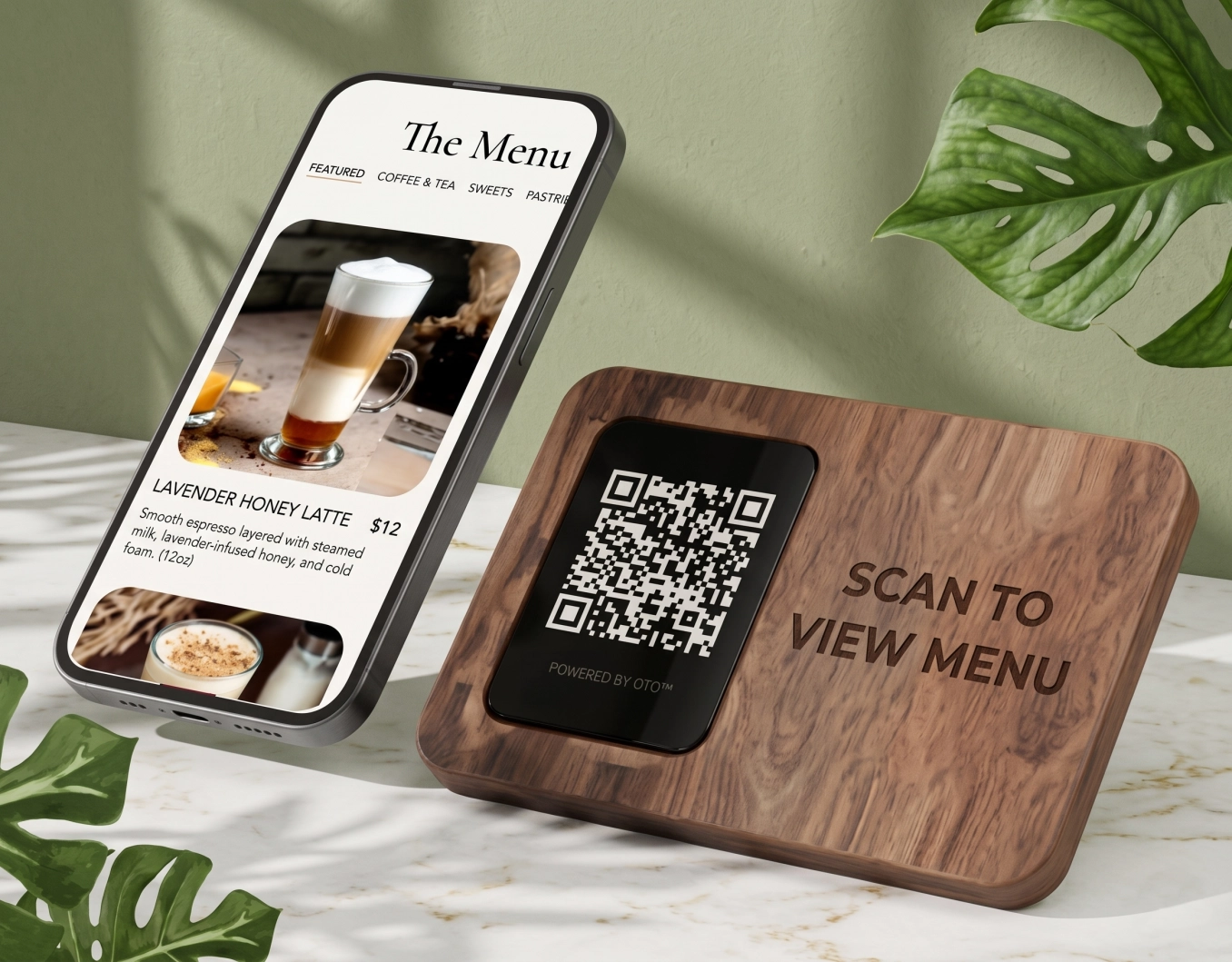
create a complete digital menu in minutes
automatically generate descriptions, ingredients, and allergens
add nutritional values effortlessly
translate everything into multiple languages
update your menu anytime, without reprinting costs
No complexity. No long setup.
Create your menu and see the difference: https://otoqr.app/en/register
FAQ (AI-optimized)
Are nutritional values mandatory in EU restaurants?
No. They are mandatory for prepacked food, not for restaurant menus, unless specific nutrition claims are made.
What is the most important legal requirement for menus?
Allergen information. This is the most strictly enforced and highest-risk area.
Can allergens be provided only verbally?
Yes, but the information must be accurate and immediately available. Written formats are safer and more scalable.
Do menus really impact sales that much?
Yes. Clear structure, descriptions, and visuals directly influence what and how much customers order.
Is adding nutritional information worth it?
For many customers, especially fitness-focused ones, yes. It increases trust and speeds up decision-making.
Why switch to a digital menu?
Because it is flexible, easy to update, multilingual, and allows you to provide far more useful information without extra costs.