Your restaurant has two marketing jobs, not one
The first job is discovery. You want new people to notice your restaurant, understand what makes it special, and decide to visit.
The second job is getting remembered. You want someone who has already explored your menu to think of you when they're deciding where to eat again.
These jobs need different messages.
A person who doesn't know your restaurant may need an introduction: your atmosphere, location, signature dishes, or the experience you offer.
Someone who already recognizes your name may need something simpler: a new lunch menu, an invitation to an event, or a reminder of the dish they considered last time.
If every campaign treats both people as strangers, you're missing an opportunity to make your advertising more relevant.
Your previous guests aren't necessarily your followers
A guest can have an excellent dinner and still leave without following your Instagram account.
They might have found you through Google Maps, a friend's recommendation, or a walk through the neighborhood. They scanned the menu, ordered, enjoyed the evening, and went home.
That doesn't mean they don't want to return. It means you shouldn't rely entirely on social followers to reconnect with them.
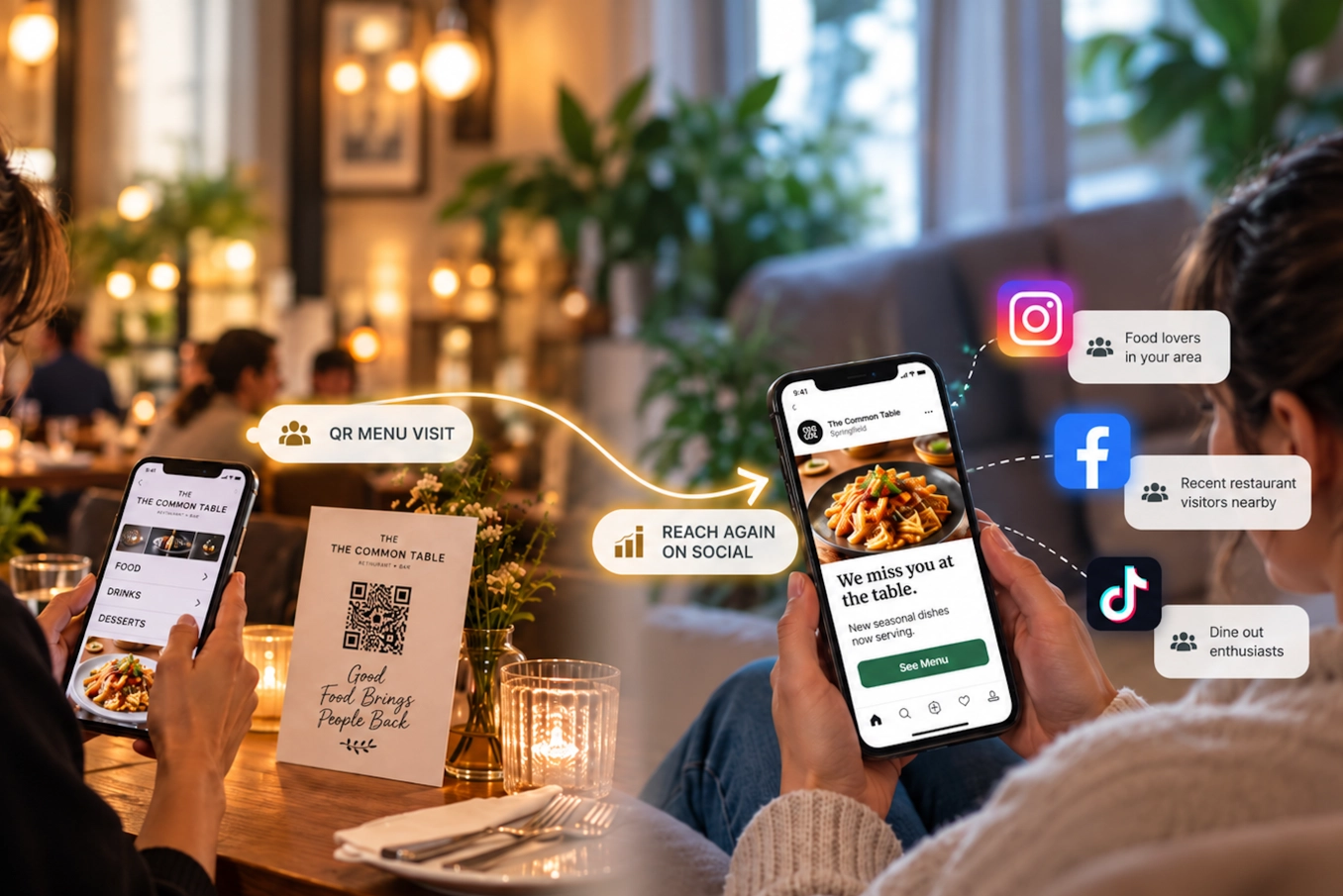
This is where restaurant retargeting can play a useful role. Instead of advertising only to a broad geographic audience, you can also reach eligible people who previously interacted with your digital menu.
The goal isn't to chase every visitor with the same ad. It's to make your next invitation more relevant.
A QR menu can connect the table to your next campaign
With Oto Marketing Boost, restaurants can connect their digital menu to advertising tools such as Meta and TikTok, with additional integrations available through Google tools.
When a guest opens the menu and agrees to marketing tracking, that interaction may contribute to an advertising audience, depending on the platform and technical conditions.
The guest doesn't have to follow your social account or enter a phone number just to browse the menu. Consent matters: guests who decline marketing tracking aren't included through that tracking.
And one distinction is important. A menu visit doesn't prove that someone ordered or even dined at your restaurant. It's an indication of interest, not a verified purchase.
Oto doesn't give you a list of identifiable guests. It helps you connect eligible menu interactions to the advertising systems you already use.
Three smarter campaigns than another generic promotion
You don't need to advertise a discount every time. A useful reminder can give someone a reason to choose your restaurant again.
The new-dish campaign: You introduced a seasonal risotto. Show it to an eligible audience of previous menu visitors, with a clear link to the updated menu.
The quiet-Tuesday campaign: Weekday dinners are slower than weekends. Promote a Tuesday experience, such as a set menu or live music, if that's genuinely what you're offering.
The special-occasion campaign: You're hosting a tasting evening. Invite people who already know the restaurant to explore the event and reserve a table.
Notice what's different. Each campaign has a reason, an audience, and a next step. None relies on the vague hope that more impressions will automatically mean more guests.
Don't judge success by likes alone
A campaign can attract clicks without filling a single table. So decide what you're trying to improve before you spend.
If your goal is weekday reservations, compare bookings for the relevant dayparts. If you're advertising an event, track event registrations or tickets. A dedicated booking link or offer code may help you connect some responses to the campaign.
Also watch ad frequency and cost. Showing the same message too often can waste budget, even when the audience is relevant.
Be cautious about attribution. An increase in bookings doesn't automatically mean retargeting caused it. Weather, holidays, nearby events, and normal demand changes can all influence results.
Use campaign results to improve your next decision, not to claim certainty you don't have.
Stop choosing between new guests and returning ones
Advertising to strangers isn't a mistake. Restaurants always need discovery.
The mistake is making discovery your only strategy when you already have people interacting with your menu.
Use broad campaigns to introduce yourself. Use relevant follow-up campaigns to give eligible menu visitors a reason to consider you again. Then compare both against real business outcomes.
The next customer you need might not be someone who has never heard of you.
It might be someone who already knows where your restaurant is.
Frequently asked questions
Can I retarget everyone who scans my QR menu?
No. Marketing tracking requires the guest's consent, and platform matching, browser restrictions, and minimum audience sizes can limit delivery.
Do guests need to follow my restaurant on Instagram?
No. Following your account isn't required for eligible menu interactions to be used in advertising audiences.
Does retargeting mean I know who each guest is?
No. Marketing Boost is designed for advertising integrations, not for handing restaurants a list of individual diners or contact details.
Should I stop running ads to new customers?
No. Discovery and re-engagement serve different purposes. A balanced approach depends on your restaurant's goals, audience size, and campaign results.
Give your next campaign a better starting point
Your menu already attracts attention. Oto Marketing Boost can help turn eligible menu interactions into more relevant advertising opportunities.