The hidden problem: most menus assume every guest behaves the same
Restaurants spend time translating menus. That’s a good start. But translation alone rarely solves the real issue.
Imagine this: A local guest opens the menu and immediately taps:
Main Courses → Steak → Order
A tourist opens the same menu and thinks:
What is this dish?
Is it spicy?
Is it large?
Is it local?
Is this popular?
Why are appetizers before local specialties?
Where are the photos?
Both guests are hungry. But one understands the context and the other doesn’t. When restaurants ignore that difference, they create friction.
And friction reduces conversion.
Different countries often browse differently
Restaurants that track menu behavior start seeing surprising patterns. Guests from different countries often show different habits.
Examples:
Some guests open photos first
Visual browsing becomes more important when people are unfamiliar with cuisine.
If tourists spend more time opening dishes with images, that’s a signal.
Some guests explore more categories
Local guests may visit one category.
Tourists may jump between five before deciding.
Some guests spend more time reading
Longer reading time is not always engagement.
Sometimes it means confusion.
Some guests abandon premium dishes
Not because of price.
Because they don’t understand the value.
Why country data changes how menus should be structured
This is where things become interesting. Country-level guest insights allow restaurants to stop guessing. Instead of asking:
“Should we redesign the menu?”
Restaurants can ask:
“Which guests struggle the most?”
Examples of changes restaurants can make:
Reorder categories
If international guests constantly open “Local Favorites,” move that section higher.
Add context to dish names
Instead of:
"Mămăligă"
Try:
Traditional Cornmeal Dish Served with Cheese and Cream
Show more visuals
Photos reduce uncertainty. Especially for unfamiliar cuisines.
Highlight social proof
Labels such as:
Guest Favorite
Most Ordered
Local Signature
can reduce decision fatigue.
Adjust recommendations
Guests visiting for the first time often appreciate curated suggestions more than huge category lists.
The conversion leak nobody sees
Imagine a guest at Table 5. They wanted dessert. They opened the category. Viewed two options. Closed the menu.
Nothing in POS data tells you why.
But menu behavior might show:
Guest language switched twice
Session duration increased
Multiple item opens
No add-to-cart action
That’s not a dessert problem. That’s a confidence problem. Restaurants usually react by changing recipes.
Sometimes the real issue is menu communication.
The Oto solution: turn menu traffic into guest understanding
Most restaurants know what sold. Very few know how guests decided.
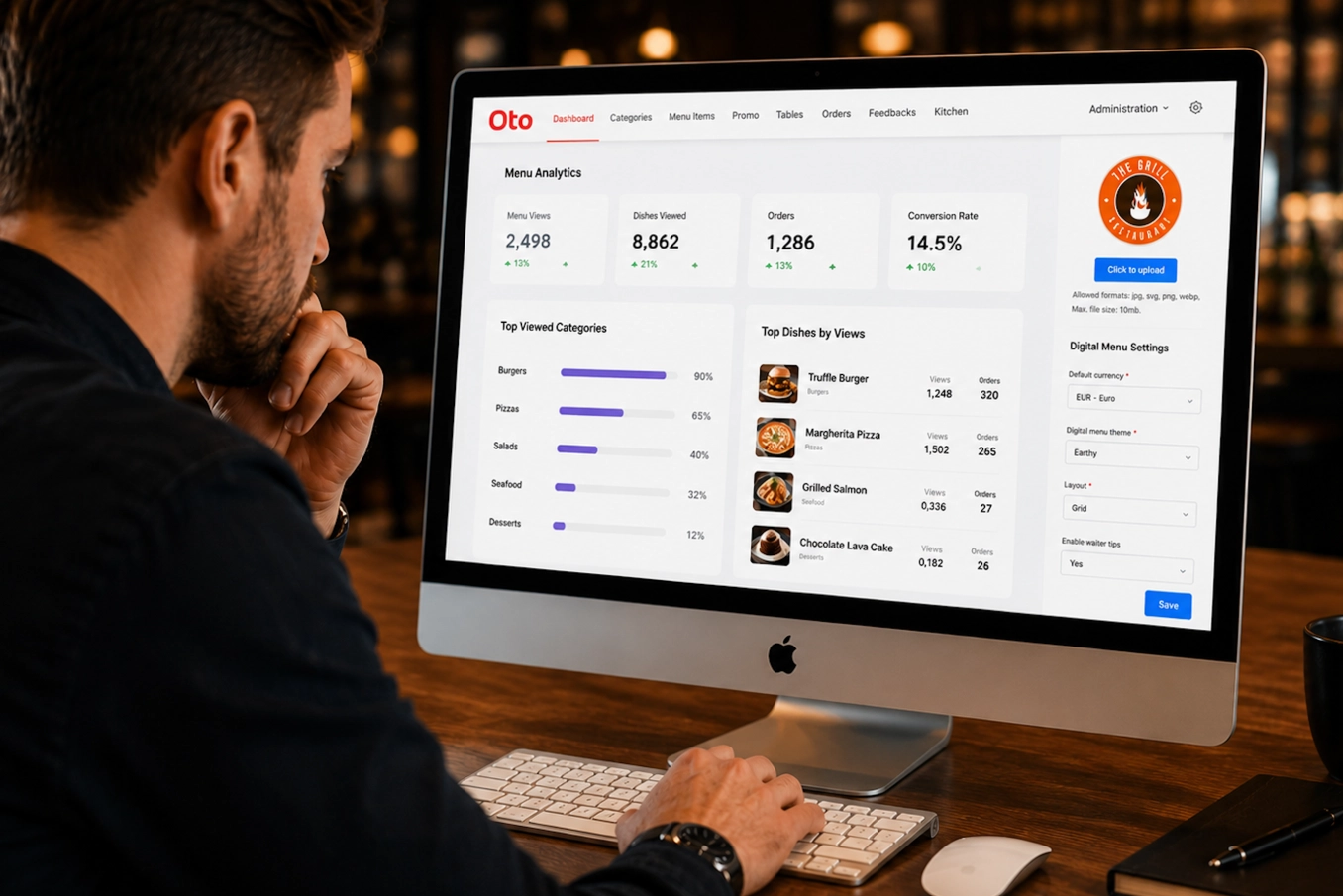
Oto helps restaurants move from sales reporting to understanding guest behavior.
With Oto, restaurants can:
See where guests are coming from
Understand country-level browsing behavior
Track which dishes attract attention
Identify categories with drop-off
Discover which guests convert and which hesitate
Compare menu performance across visitor groups
That means restaurant teams can stop redesigning menus based on opinions. And start improving based on actual guest interactions. Imagine discovering that tourists from one country consistently view premium dishes but rarely order.
That insight changes pricing, descriptions, positioning, and recommendations immediately.
That’s restaurant automation that actually influences revenue.
What to look at first if your restaurant receives tourists
You don’t need dozens of reports. Start with these five questions:
Which countries generate the most menu sessions?
Visitors may not match your assumptions.
Which countries convert best?
High traffic doesn’t always mean high revenue.
Which categories do tourists open first?
That tells you what they expect.
Which dishes receive attention but low orders?
Those are menu optimization opportunities.
How much time passes before ordering?
Long browsing may signal uncertainty.
Small changes here often produce faster results than adding new menu items.
Your menu should adapt the way your staff already does
Great hospitality is adaptation. When a guest speaks another language, staff naturally explain more. When someone looks uncertain, they recommend dishes.
Menus should work the same way. If your restaurant welcomes international guests, your digital guest experience should recognize that not everyone arrives with the same expectations. Because tourists don’t only bring traffic.
They bring different decision-making patterns. And restaurants that understand those patterns usually convert more of them.
Try Oto
Turn menu browsing into actionable insights.
See how guests interact with your menu, understand visitor behavior, and make decisions based on real data instead of assumptions.
Register here: Oto
FAQ
Is translating the menu enough for tourists?
Not always. Translation helps, but structure, photos, recommendations, and context often influence decisions more than language alone.
Can country-level data improve restaurant sales?
Yes. It helps identify where guests hesitate, what they explore, and which menu changes can improve conversion.
What menu elements matter most for tourists?
Usually: visuals, descriptions, category order, popular labels, and dish explanations.
Can smaller restaurants benefit from guest analytics?
Absolutely. Even moderate tourist traffic can reveal patterns that improve ordering experience.
How quickly can menu changes affect conversion?
Simple changes like moving categories, improving descriptions, or adding visuals can sometimes show impact within days.