A restaurant built for busy summer days
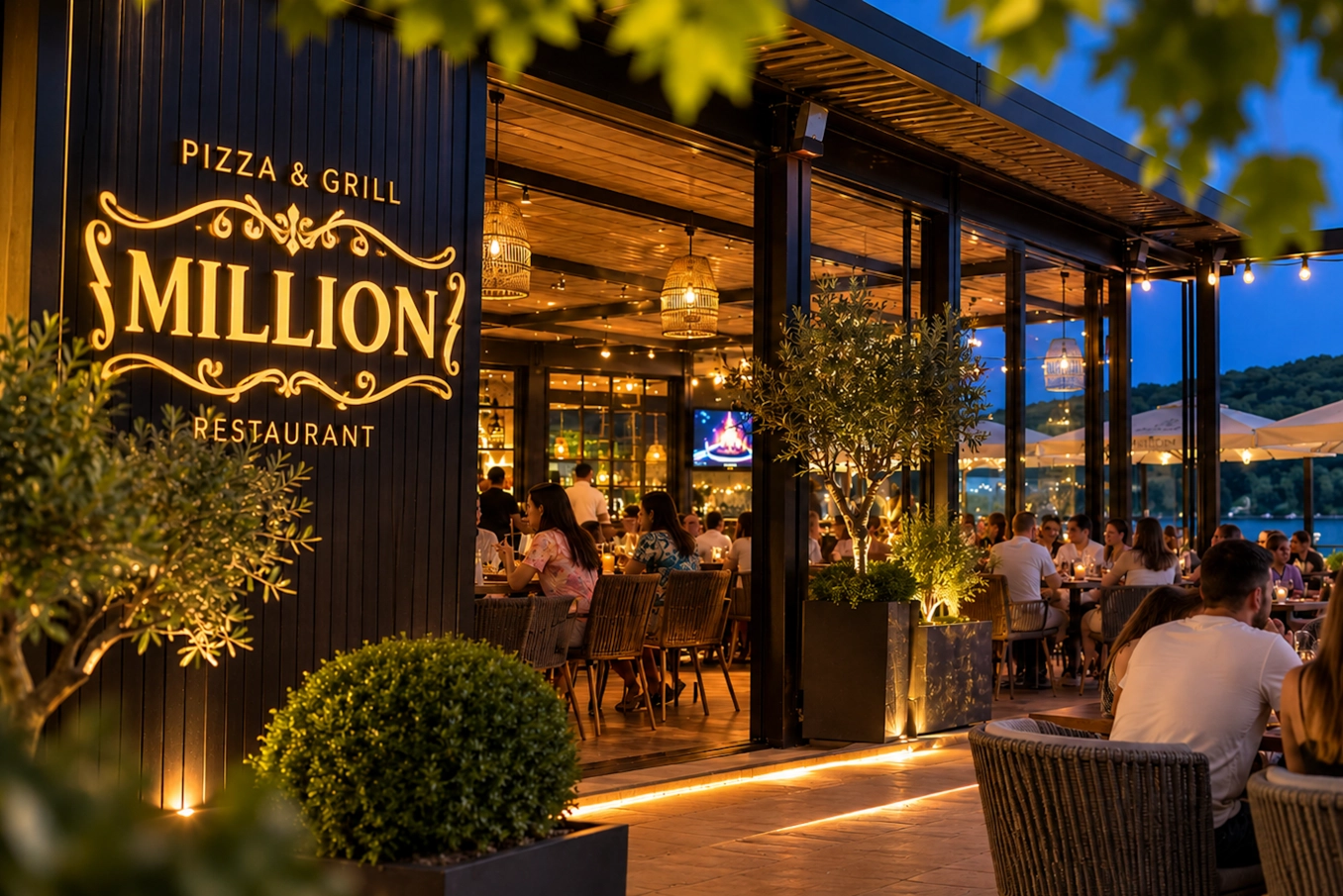
Million Pizza & Grill Bar is the kind of place where the setting is part of the experience.
Located next to the river, it is a natural destination for summer lunches, dinners with friends and long evenings around the table. And, of course, there is the pizza.
Million has developed a selection of pizzas with their own character. They are not simply another item on a long restaurant menu. For many guests, they are one of the reasons to come back.
That creates a good problem to have.
When summer arrives, the restaurant gets busy.
Very busy.
And when almost every table is occupied, the pressure doesn't only fall on the kitchen. It falls on the entire team.
Waiters have to take orders, answer questions, bring dishes, check on tables, deliver bills, collect payments and respond whenever a guest needs something.
When there are only a few tables, that is hospitality.
When every table needs something at the same time, it becomes logistics.
The problem wasn't the number of waiters
Million didn't necessarily need a bigger team.
They needed to make better use of the team they already had.
Think about what happens during a busy service.
A guest scans the menu and wants to know what is inside a particular pizza.
Another guest needs to check whether a dish contains an allergen.
Someone wants to call the waiter.
A table has finished and wants the bill.
Another guest wants to leave a tip.
None of these actions is particularly complicated.
But each one can require a waiter to physically walk to the table.
Then walk back.
Then return again.
Multiply that by dozens of tables during a busy summer evening and the amount of time disappears quickly.
The challenge for Million was simple:
How do you make the service faster without making the team bigger?
The menu also had another job to do
There was another reason Million needed to rethink its menu.
Restaurants today need to provide guests with much more information than they traditionally did with a printed menu.
Ingredients matter.
Allergens matter.
Guests want to understand what they are ordering before making a decision.
With a physical menu, adding this information can quickly make the menu crowded and difficult to navigate. Updating it also means printing new copies and replacing the old ones.
For a restaurant with a constantly changing summer environment, that is not particularly flexible.
Million needed a menu that could provide the necessary information while remaining easy for guests to use.
That's where the digital menu came in.
From a physical menu to a digital guest experience
Million chose Oto to create a digital menu that could do more than simply display dishes.
Guests can scan a QR code at the table and immediately access the restaurant's menu on their own phone.
The menu can include detailed information about dishes, including ingredients and allergen information, without forcing the restaurant to squeeze everything onto a physical page.
That creates flexibility for the restaurant and clarity for the guest.
If a dish changes, the digital menu can be updated.
If information needs to be added, it can be added.
If the restaurant wants to improve the presentation of a dish, it can do that without redesigning and reprinting an entire menu.
For a busy restaurant, that flexibility matters.
But the biggest benefit for Million goes beyond the menu itself.
The QR menu became a second channel for service
The real difference is what happens after the guest opens the menu.
Oto gives guests several actions they can take directly from their phone.
Call the waiter
Instead of waving across the terrace or trying to catch a waiter walking past, a guest can simply use the Call waiter button.
The request reaches the team, and the waiter can respond when they are ready.
That doesn't eliminate personal service.
It makes personal service more organized.
Request the bill
Asking for the bill is one of those tiny interactions that can create surprisingly large delays during a busy service.
A guest finishes eating.
They are ready to leave.
But the waiter is currently serving another table.
With Oto, the guest can request the bill directly from the digital menu.
The waiter doesn't need to constantly scan the room looking for raised hands.
Leave a tip
Tipping can also become part of the digital experience.
Instead of waiting for the waiter to bring a payment terminal or handling everything manually, guests can access the tipping option through the menu.
It is a small feature, but it removes another unnecessary step from the service process.
Leave feedback
Oto also gives Million a direct channel for guest feedback.
That matters because a full restaurant can make it difficult for staff to notice every small problem during service.
A guest may leave unhappy without saying anything.
Digital feedback creates an opportunity to hear what happened and understand the guest experience more clearly.
The goal isn't to replace waiters
This is an important distinction.
Million didn't choose Oto because they wanted fewer human interactions.
They chose it because they wanted better human interactions.
A waiter shouldn't have to spend valuable time answering the same basic menu question over and over when the information can already be available to the guest.
A waiter shouldn't have to run across a busy terrace because someone wants the bill.
And a guest shouldn't have to wave for five minutes just to get someone's attention.
Technology can take care of these small logistical tasks.
The waiter can then focus on what technology cannot replace: hospitality.
Recommending a pizza.
Answering a complicated question.
Checking whether everything is fine.
Talking to guests.
Creating the experience that makes people want to come back.
Why this matters when the restaurant is full
Restaurant automation is often discussed in terms of efficiency.
But for a place like Million, there is another important benefit: capacity.
When the restaurant is full, the goal isn't necessarily to serve fewer guests with fewer employees.
The goal is to help the existing team handle more interactions without creating chaos.
Imagine a busy summer evening.
Twenty tables are occupied.
Instead of ten guests simultaneously trying to get a waiter's attention, some requests are handled directly through the digital menu.
Instead of every guest needing a printed menu, they have the information on their phones.
Instead of waiting for a waiter to explain ingredients or allergens, guests can check the menu themselves.
Instead of the team constantly checking which tables want the bill, guests can request it digitally.
None of these changes looks revolutionary on its own.
Together, they can make a busy service feel much more manageable.
A better menu for the guest, a calmer workflow for the team
That is ultimately what makes Million's story interesting.
They didn't adopt a QR menu simply because digital menus are trendy.
They had very practical problems to solve.
They needed:
A flexible menu that could contain detailed dish information
Ingredient and allergen information for guests
A faster way for guests to request service
Less unnecessary running around for waiters
A simple way to request the bill
Digital tipping
A direct channel for guest feedback
A solution that could handle the pressure of a busy summer season
Oto brings these functions together in one digital guest experience.
And the result is not a restaurant with less hospitality.
It is a restaurant where hospitality has fewer unnecessary obstacles.
The lesson for other busy restaurants
Million's experience shows something that many restaurant owners discover only after their busiest season:
When demand grows, adding more staff isn't always the only answer.
Sometimes the better question is:
How much work are our employees doing that could be handled more efficiently?
If waiters spend their time running back and forth, answering repetitive questions, delivering bills and trying to notice raised hands across a crowded terrace, there is an opportunity to redesign the workflow.
A digital menu can become much more than a replacement for paper.
It can become part of the restaurant's operating system.
Guests get information faster.
Waiters receive requests more efficiently.
Owners get more flexibility.
And the restaurant can handle a busy service without making every employee run faster and faster.
For Million Pizza & Grill Bar, that matters most when the riverside terrace is full, the kitchen is working at full speed, and guests are there to enjoy what the restaurant does best: great pizza, good food and a memorable summer evening.
Try Oto
Your restaurant may not have a riverside terrace or Million's signature pizzas.
But if your tables are full, your waiters are constantly running and guests keep asking for the same things, the problem may not be that you need more people.
You may simply need a smarter workflow.
Oto combines a flexible digital menu with tools like Call waiter, Request bill, digital tipping and guest feedback, helping restaurants serve guests faster without losing the human side of hospitality.
FAQ
Why did Million Pizza & Grill Bar switch to a digital menu?
Million needed a more flexible menu that could provide detailed ingredient and allergen information while also helping the restaurant manage busy summer service more efficiently.
Can a digital menu help restaurants serve guests faster?
Yes. A digital menu can give guests immediate access to menu information and allow them to perform actions such as calling the waiter or requesting the bill without waiting for a waiter to become available.
Does Oto replace restaurant waiters?
No. Oto is designed to support waiters, not replace them. It handles simple requests and provides information digitally, allowing staff to spend more time on hospitality and meaningful guest interactions.
Can Million's guests see ingredients and allergens in the digital menu?
Yes. A digital menu allows restaurants to provide detailed dish information, including ingredients and allergen information, in a format that can be updated without reprinting physical menus.
Can guests call a waiter through Oto?
Yes. Oto includes a Call waiter function that allows guests to request assistance directly from the digital menu.
Can guests request the bill through Oto?
Yes. Guests can use the Request bill function from the digital menu, reducing the need to wait for a waiter to notice that they are ready to leave.
Can guests leave tips through Oto?
Yes. Oto can include a digital tipping option, giving guests a convenient way to leave a tip through the digital guest experience.
Can guests leave reviews through Oto?
Yes. Oto can provide a direct feedback channel where guests can leave reviews about their experience.
Is a QR menu useful for restaurants that are already busy?
Especially so. When a restaurant is busy, small service requests can consume a significant amount of staff time. A digital menu can help organize these interactions and allow the existing team to handle more guests efficiently.
Where can I see Million Pizza & Grill Bar's digital menu?
You can explore Million's current digital menu here: