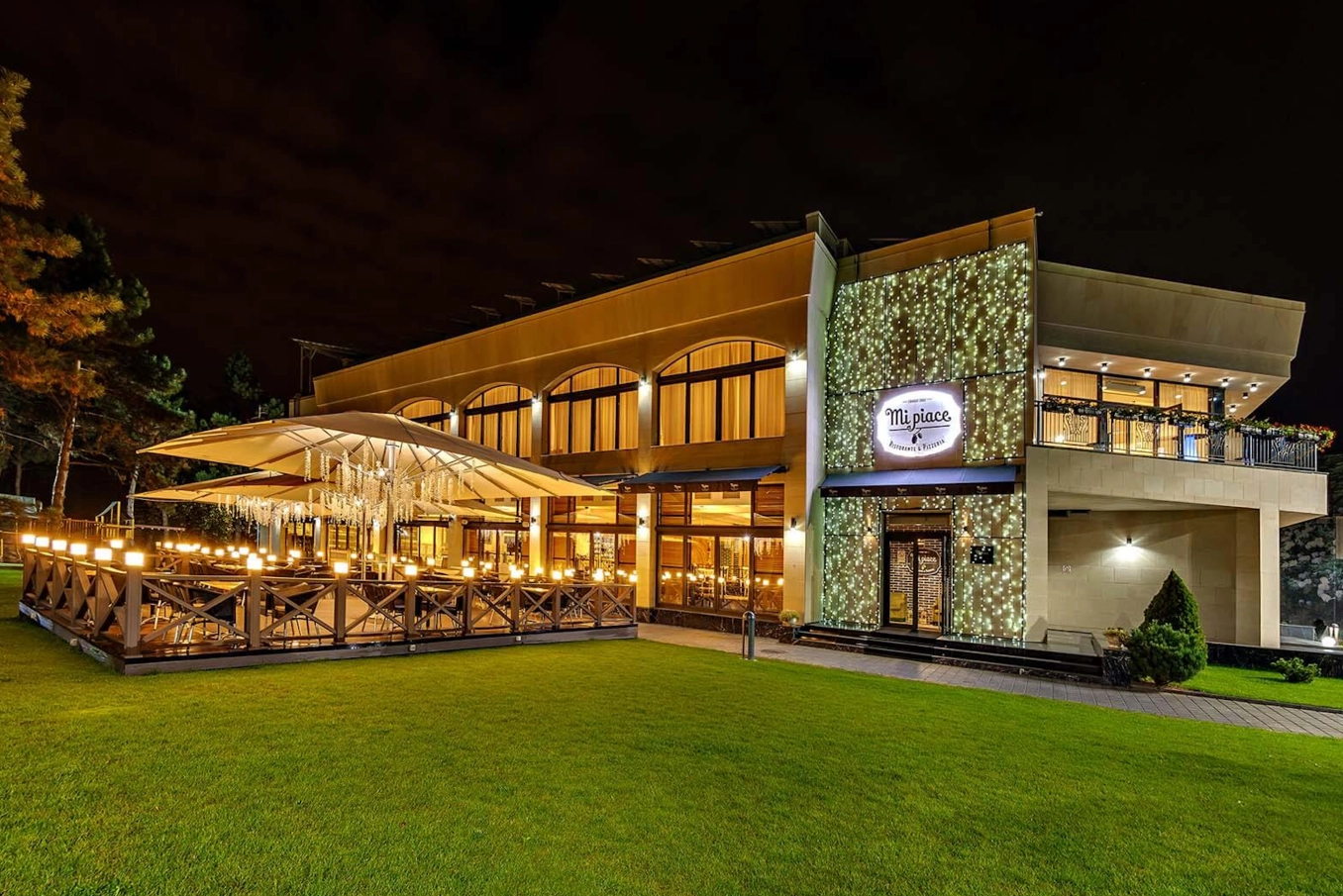
Only days after Mi Piace in Chișinău switched to Oto's digital menu, representatives of ANSA (the National Food Safety Agency) arrived for a routine inspection. ANSA is responsible for ensuring that restaurants comply with food safety and consumer information regulations, including the information that must be provided to guests about the food they serve.
Mi Piace's digital menu from Oto included detailed ingredient lists and allergen information for every dish. After reviewing the menu, the inspectors confirmed that everything was in order.
Their former printed menu, however, did not contain all of the mandatory information required under current regulations. Had the inspection taken place just a few days earlier, before the restaurant switched to Oto, the outcome could have been very different.
For Mi Piace, what started as a decision to modernize their menu quickly became proof that digitalization is about much more than convenience.
Why restaurants can no longer rely on traditional menus
Many restaurant owners still see a menu as a simple list of dishes and prices.
In reality, today's menu has become an important compliance document.
Modern food regulations increasingly require restaurants to provide guests with detailed information, including:
Complete ingredient lists
Allergens
Food additives where applicable
Nutritional information in certain cases
Accurate descriptions of dishes
The challenge is that menus are constantly changing.
Recipes evolve.
Suppliers change.
New dishes are introduced.
Seasonal ingredients come and go.
Updating a printed menu every time something changes is expensive, slow, and often impractical. As a result, many restaurants continue using menus that no longer contain all the required information.
That creates unnecessary risk.
One update instead of hundreds of reprints
This is exactly where digital menus make a difference.
With Oto, Mi Piace's team can update any dish within minutes.
Need to add an allergen?
Change an ingredient?
Correct a recipe?
Update a description?
Everything becomes available to guests immediately without waiting for a new print run.
Instead of managing dozens of printed menus, the restaurant manages a single digital version that every guest sees in real time.
That means the information stays accurate, consistent, and available whenever inspectors or guests need it.
More transparency for guests
Food allergies are becoming increasingly common.
Some guests avoid gluten. Others need to avoid nuts, shellfish, dairy, or specific ingredients for medical or dietary reasons.
When this information isn't easily available, guests have only one option: ask the waiter.
During busy service, this creates delays and increases the chance of misunderstandings.
A digital menu changes that experience completely.
Guests can review ingredients and allergens themselves before ordering, making them feel more confident about their choices while reducing pressure on the restaurant staff.
Transparency builds trust, and trust keeps guests coming back.
Compliance becomes part of daily operations
One of the biggest advantages of a digital menu is that compliance is no longer something restaurants think about only before an inspection.
It becomes part of everyday work.
Whenever a chef changes a recipe, the menu can be updated immediately.
Whenever a new seasonal dish is introduced, all mandatory information can be added before the first guest orders it.
Instead of reacting to regulations, restaurants stay prepared all year round.
Mi Piace experienced exactly that.
The inspection wasn't planned around the launch of the digital menu. It simply happened a few days later. Because the necessary information was already available digitally, the restaurant was ready.
A better experience for guests too
Although compliance was an unexpected benefit, Mi Piace originally introduced Oto for another reason: to improve the guest experience.
Today, guests can access the menu instantly by scanning a QR code.
They can browse dishes at their own pace, view photos, read descriptions, check ingredients and allergens, and explore the menu without waiting for a printed menu to arrive.
You can explore Mi Piace's digital menu here: https://menu.otoqr.app/en/mi-piace/XJlC6Ij40NN4n47l
Because Oto supports multiple languages, international visitors can also browse the menu in their preferred language, making ordering easier for tourists and business travelers.
Digital menus are no longer just about convenience
For years, restaurants adopted QR menus to reduce printing costs or speed up service.
Today, the reasons are much bigger.
A modern digital menu helps restaurants:
Keep ingredient information up to date.
Display allergen information clearly.
Make menu updates instantly.
Improve the guest experience.
Reduce printing costs.
Support multiple languages.
Stay better prepared for inspections.
The experience of Mi Piace shows that sometimes the biggest return on investment isn't increased sales.
Sometimes it's avoiding a problem before it happens.
What every restaurant owner should ask themselves
If ANSA inspectors visited your restaurant tomorrow, would every menu on every table contain all the information required by current regulations?
If the answer isn't a confident "yes," it may be time to rethink how your menu is managed.
The hospitality industry is becoming increasingly digital, and regulations continue to evolve alongside guest expectations.
A printed menu may still look familiar, but it can quickly become outdated.
A digital menu evolves with your restaurant.
And sometimes, as Mi Piace discovered, that difference can be worth far more than the cost of going digital.
Try Oto
Oto is more than a QR menu. It's a complete digital platform that helps restaurants keep their menus up to date, provide guests with the information they need, and simplify everyday operations.
Whether you want to improve the guest experience, update your menu instantly, support multiple languages, or stay ready for future inspections, Oto gives you the tools to do it.
Start your free trial today:
FAQs
Can a digital menu help restaurants comply with food safety regulations?
Yes. A digital menu allows restaurants to provide detailed information about dishes, including ingredients, allergens, and descriptions. Unlike printed menus, digital menus can be updated instantly whenever recipes or ingredients change, helping restaurants keep information accurate.
Why are allergen declarations important for restaurants?
Allergen information helps guests make safe dining decisions and is an important part of food transparency. Missing or outdated allergen information can create risks for both customers and restaurant operators.
What is ANSA?
ANSA (National Food Safety Agency of the Republic of Moldova) is the government authority responsible for food safety, consumer protection, and ensuring that food businesses comply with national regulations. Among its responsibilities is verifying that restaurants provide the mandatory information required for the food they serve.
What are the advantages of a digital menu over a printed menu?
A digital menu offers several advantages:
Instant updates without reprinting.
Detailed ingredient and allergen information.
Multiple language support.
Dish photos and descriptions.
Lower printing costs.
Better guest experience.
Easier compliance with changing regulations.
Can Oto update menu information instantly?
Yes. Restaurant staff can update dishes, prices, ingredients, allergens, descriptions, and availability through Oto's administration panel. Changes become visible to guests immediately across all QR menus.
Is Oto only a QR menu?
No. Oto is a complete digital guest experience platform. In addition to digital menus, it offers multilingual menus, instant menu management, waiter call, bill request, digital tips, guest feedback, AI-powered content generation, and behavioral analytics that help restaurants understand how guests interact with their menu before they place an order.