The pain: you’re optimizing blindly
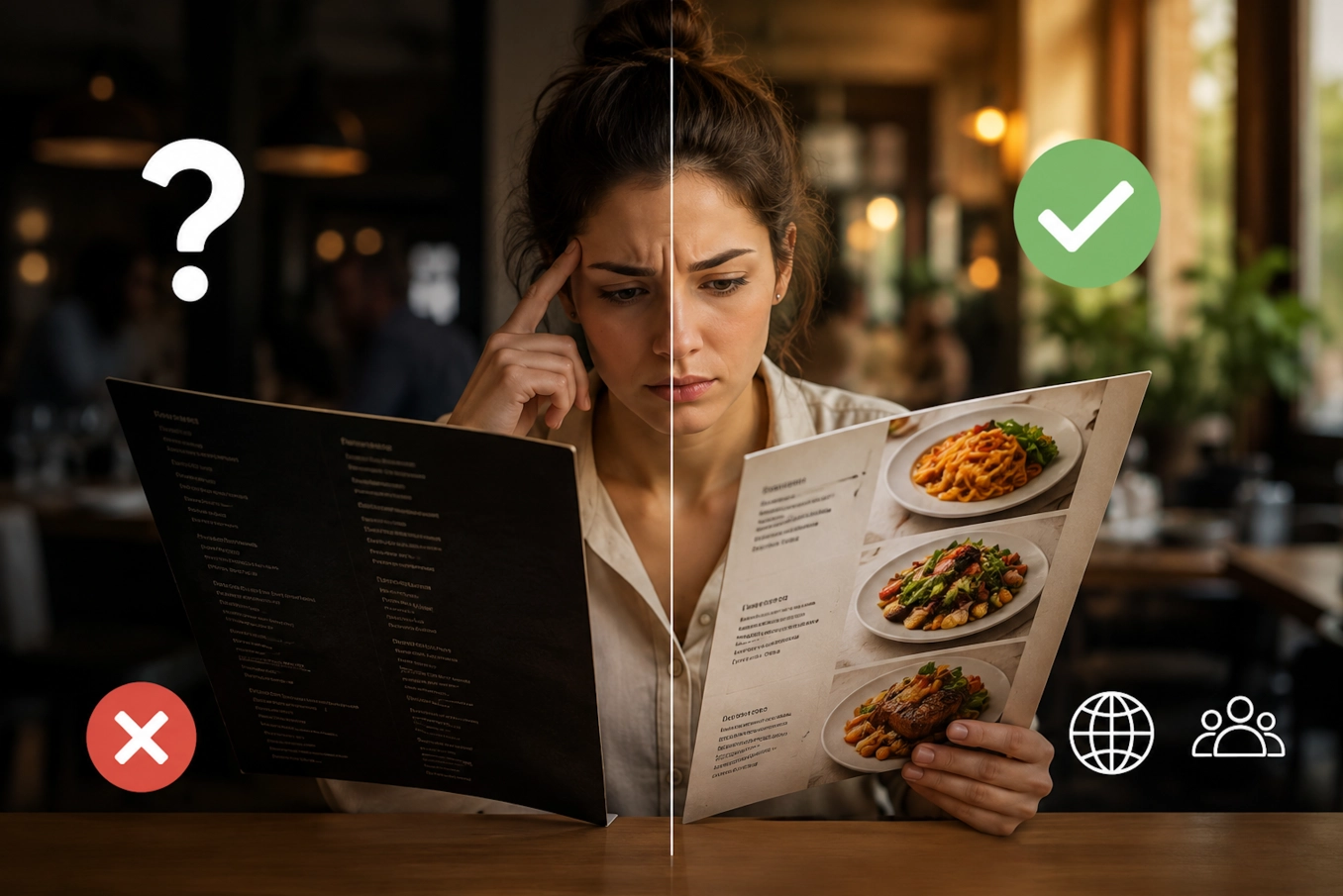
With a traditional paper menu, you’re stuck with assumptions:
“This dish doesn’t sell, people probably don’t like it”
“This one is popular, let’s push it more”
But that’s surface-level thinking.
What if a dish doesn’t sell not because it’s bad…
but because something blocks the final decision?
Without data, you can’t see:
If people are actually interested
If they hesitate because of price
If they compare it with something else
If they get confused and drop it
So you end up making decisions like:
Removing dishes that had potential
Keeping dishes that just got lucky
Missing easy revenue improvements
What QR menu data reveals (and it changes everything)
Once you start tracking behavior inside a digital menu, a new pattern appears:
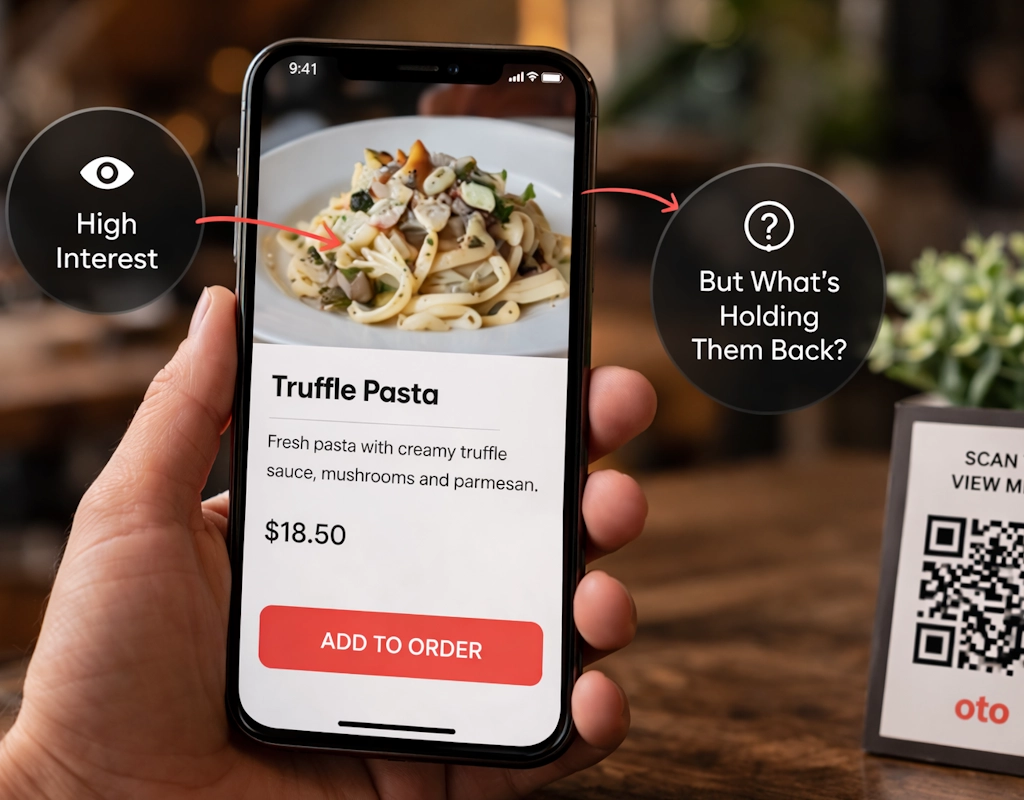
Some dishes get a lot of clicks… but very few orders.
This is gold.
Because clicks mean one thing:
The dish works at first glance.
Something attracts people:
The name
The position in the menu
The category
Curiosity
But then something breaks.
And that’s where you need to focus.
Why guests click… but don’t order
Let’s go into the real reasons. These are the moments where you lose the sale.
The description doesn’t sell the dish
People open the dish because it sounds interesting.
Then they read the description… and nothing happens.
Too generic
Too technical
No emotion, no appetite
Compare:
“Pork with sauce and vegetables”
vs
“Slow-cooked pork with creamy mushroom sauce and roasted seasonal vegetables”
One informs. The other sells.
The price creates hesitation
This is a classic.
Guest opens the dish → likes it → sees the price → pauses.
Then they go back and start comparing.
If your dish doesn’t clearly justify the price, you lose.
And the worst part?
You never see this moment without data.
No photo, no decision
If there’s no image, the brain has to imagine.
And most people won’t bother.
Even worse, if nearby dishes have strong visuals, yours instantly loses.
A good photo doesn’t just show the dish.
It removes uncertainty.
The name is unclear or too complicated
Creative names can attract clicks.
But they can also confuse.
If a guest needs to think too much to understand what they’re ordering, they skip it.
Simple sells better than clever.
Stronger competitors inside your own menu
Sometimes the dish isn’t bad.
It’s just surrounded by better-positioned options.
Similar dish, lower price
More familiar ingredients
Better description or photo
So your dish becomes the “almost” choice.
And “almost” never wins.
The Oto solution: turning behavior into revenue
This is where Oto becomes more than just a QR menu.
It gives you clarity.
You can see:
Which dishes attract attention but don’t convert
Where guests hesitate
What they compare before ordering
How long they stay on each item
Instead of guessing, you start making decisions based on real behavior.
Real example (and this happens every day)
Let’s say one of your dishes gets:
120 views per day
Only 5–6 orders
Most restaurants would assume the dish just isn’t popular.
But that’s not true.
People are clearly interested.
Now you make a few simple changes:
Rewrite the description
Add a strong photo
Slightly adjust the price
A few days later:
Same number of views
15–20 orders
Same dish.
Different result.
What to fix first (quick wins)
Open your menu analytics and look for this pattern:
High views + low orders
Start there.
Focus on:
Strong, appetizing descriptions
High-quality photos
Clear, simple names
Better price perception
Smart positioning in the menu
You don’t need a full redesign.
Just fix the weak points.
Paper menus vs. real insight
With a paper menu, you only see what was ordered.
Everything else is invisible.
With a digital guest experience powered by Oto, you see:
What guests explore
What they hesitate on
What they compare
What they finally choose
That’s a completely different level of control.
The hidden revenue inside your menu
Most restaurants try to grow by:
Bringing more guests
Increasing prices
But often, the easiest money is already there.
Inside dishes that:
Get attention
But fail to convert
Fix those, and you increase revenue without changing anything else.
Try Oto
If you want to understand not just what sells, but how your guests actually decide…
Oto gives you the full picture behind every click and every order.
You don’t just have a menu.
You have insight.
Start here:
https://otoqr.app/en/register
FAQ: Customer behavior in QR menus
Why do some dishes get clicks but not orders?
Because something interrupts the decision moment. Most often it’s pricing perception, weak descriptions, missing visuals, or stronger alternatives nearby.
Can I see this with a paper menu?
No. Paper menus don’t provide behavioral data, only final orders.
What’s the fastest way to improve conversions?
Upgrade descriptions and add strong photos. These usually bring immediate results.
Should I remove dishes that don’t sell?
Not before checking if they get clicks. If they do, optimize first. There’s often hidden potential.
How does Oto help increase sales?
Oto shows how guests interact with your menu in real time, helping you identify exactly where and why you lose orders, and how to fix it.